How to Spot Fake Matcha: A Buyer's Guide
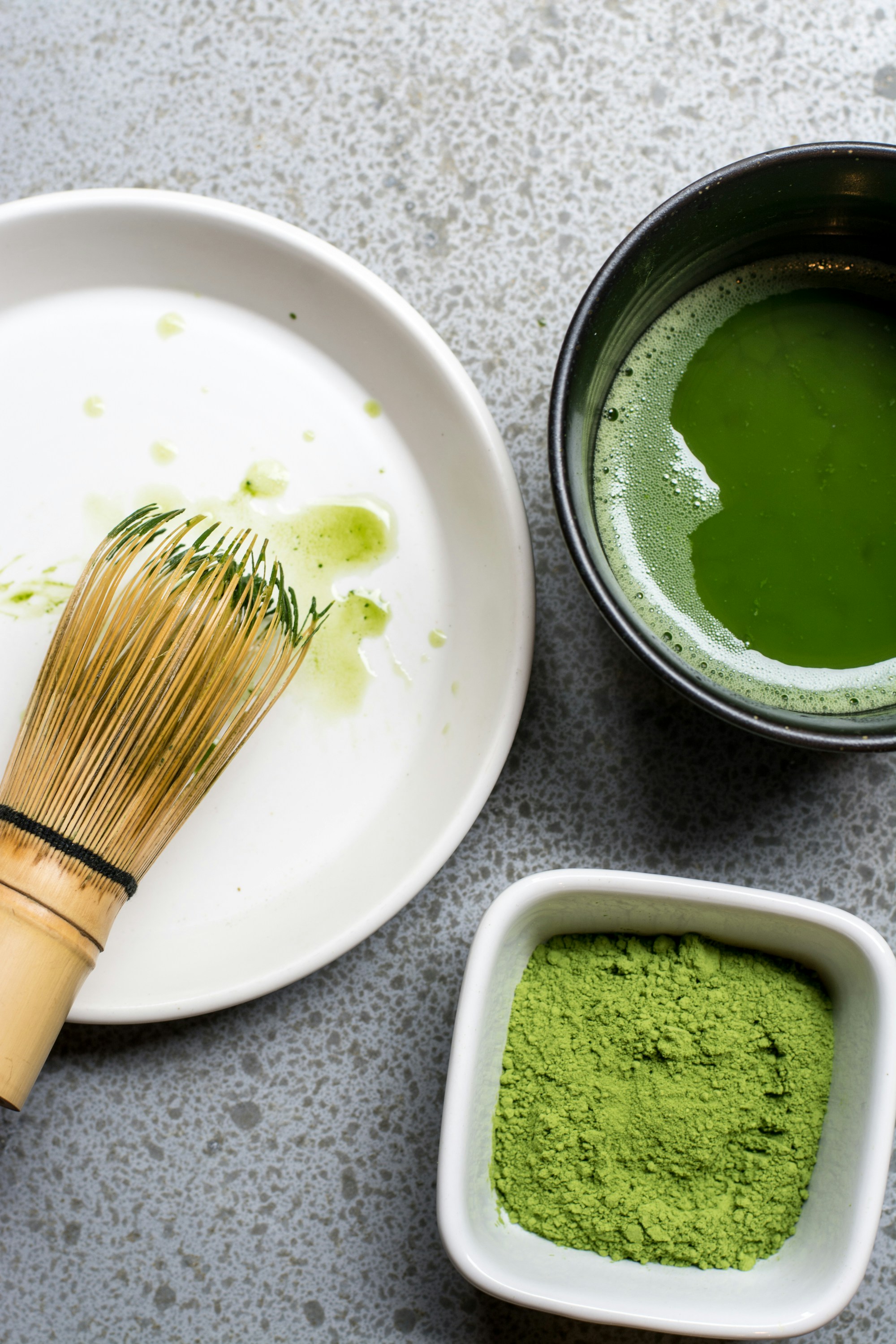
The matcha market is flooded with impostors. Walk into any grocery store and you will find tins labeled "matcha" that are actually low-grade green tea powder, Chinese imitation products, or worse — matcha cut with fillers like rice powder, sugar, or food coloring.
Learning to spot fake matcha protects your health, your wallet, and your taste buds. Here is exactly what to look for — and what to avoid.
Red Flag #1: The Color Is Wrong
Real ceremonial matcha is a vivid, electric jade green — almost neon. It should look alive.
Fake or low-quality matcha tends toward:
- Olive or brownish-green: Old stock, poor storage, or sun-grown leaves (not shade-grown)
- Yellowish-green: Lower-grade leaves or improper processing
- Artificially bright green: Some producers add food coloring to mimic quality
The test: Place a small amount on white paper. Real matcha should be a deep, saturated green with no yellow or brown undertones.
Red Flag #2: The Price Is Too Good
Authentic stone-ground ceremonial matcha from Japan costs money to produce. If you see a 100-gram bag for $10, it is not matcha — it is powdered green tea at best, and potentially something worse.
Expect to pay:
- Ceremonial grade: $1 to $3 per gram
- Culinary grade: $0.30 to $0.80 per gram
Anything significantly cheaper should raise immediate suspicion.
Red Flag #3: No Origin Information
Real matcha proudly states its origin. Look for specific regions:
- Uji, Kyoto
- Nishio, Aichi
- Kagoshima
- Shizuoka
Be wary of vague labels like "product of Japan" with no region specified, or worse — no country of origin at all. Chinese "matcha" is often sold under Japanese-sounding brand names. If the label does not clearly say "Made in Japan" or list a Japanese region, investigate further.
Red Flag #4: The Texture Is Coarse
Real matcha is ground to 5 to 10 microns — finer than baby powder. It should feel silky and dissolve almost completely in water.
Fake matcha is often:
- Coarse or gritty
- Slow to dissolve, leaving sediment
- Clumpy even after sifting
The test: Rub a pinch between your fingers. Real matcha feels like fine talc. If you feel grit or grains, it is not properly ground.
Red Flag #5: The Taste Is Bitter or Bland
High-quality matcha has a complex flavor profile: naturally sweet, rich in umami, with a creamy mouthfeel and minimal bitterness. Fake matcha is often:
- Harshly bitter (from poor shading or old leaves)
- Completely bland (indicates fillers or extreme dilution)
- Astringent and drying (from sun-grown leaves high in tannins)
The test: Whisk 1 gram in 60 ml of 75-degree C water. Real matcha should taste smooth and slightly sweet, even without added sugar. If it is unbearably bitter, something is wrong.
Red Flag #6: The Packaging Is Transparent
Light destroys matcha. Any producer selling matcha in clear glass or plastic containers either does not understand matcha or does not care about quality. Matcha should always be packaged in:
- Opaque tins
- Foil-lined bags
- Vacuum-sealed containers
Red Flag #7: No Harvest Date
Matcha is perishable. After grinding, it begins losing flavor and color within weeks. Reputable brands include a harvest date or grind date on the packaging. If there is no date, the matcha could be months or even years old.
Ideally, consume matcha within 3 to 6 months of grinding. Some brands sell last year's harvest at a discount — this is fine for culinary use, but not for ceremonial drinking.
How to Tell If Genuine Matcha Has Oxidized
Not every dull, brownish tin is counterfeit — sometimes it's real matcha that's simply gone stale. It's worth telling the two apart, because the fix is completely different: fake matcha means finding a new supplier, while oxidized matcha just means using it up faster or storing the next batch better.
- Track the color shift over time. Freshly ground matcha is vivid, almost electric jade. As it oxidizes after opening, that color gradually dulls toward olive, then yellow-brown — the same direction as the "fake matcha" red flag above, but happening gradually to a tin that started out genuine.
- Compare against a sealed sample if you can. A side-by-side with an unopened tin (or a photo taken the day you opened it) makes the drift obvious in a way memory alone won't.
- Smell for staleness, not just bitterness. Oxidized matcha often smells flat or slightly like hay rather than fresh and grassy, even before the taste changes noticeably.
- Note how long it's been open. If it's been more than 4 to 6 weeks since you broke the seal and it's been stored anywhere warm or bright, oxidation — not fraud — is the most likely explanation for a color change. See our guide on storing matcha properly to slow this down.
Red Flag #8: It Is Sold as a "Detox" or "Weight Loss" Product
Matcha has health benefits, but any brand marketing it primarily as a detox, cleanse, or fat-burning miracle is likely cutting corners on quality to maximize profit. These products often contain:
- Added sugar or artificial sweeteners
- Fillers and bulking agents
- Low-grade powder with fancy branding
How to Verify Authenticity
| Check | Real Matcha | Fake Matcha |
|---|---|---|
| Color | Vivid jade green | Olive, brown, or artificially bright |
| Origin | Specific Japanese region listed | Vague or missing |
| Price | $1-3/g ceremonial | Under $0.50/g "ceremonial" |
| Texture | Silky, 5-10 microns | Coarse or gritty |
| Taste | Sweet, umami, smooth | Bitter, bland, astringent |
| Packaging | Opaque, airtight, dated | Clear, undated, loose |
| Certification | JAS organic, radiation tested | No certifications |
Trusted Brands to Start With
If you are unsure where to begin, these brands have established reputations for authenticity and transparency:
- Ippodo Tea (Kyoto, since 1717)
- Encha (Organic, Uji)
- Naoki Matcha (Kagoshima/Uji blends)
- Jade Leaf (Entry-level, authentic)
- Aiya (Nishio, wholesale and retail)
When in doubt, buy less but buy better. A 20-gram tin of real ceremonial matcha from a trusted Japanese producer will give you a better experience than 100 grams of imitation powder. Your palate — and your body — will thank you.